
2026-08-31 · John Smith
Handling Sewage Backup After Heavy Rains In Mesa
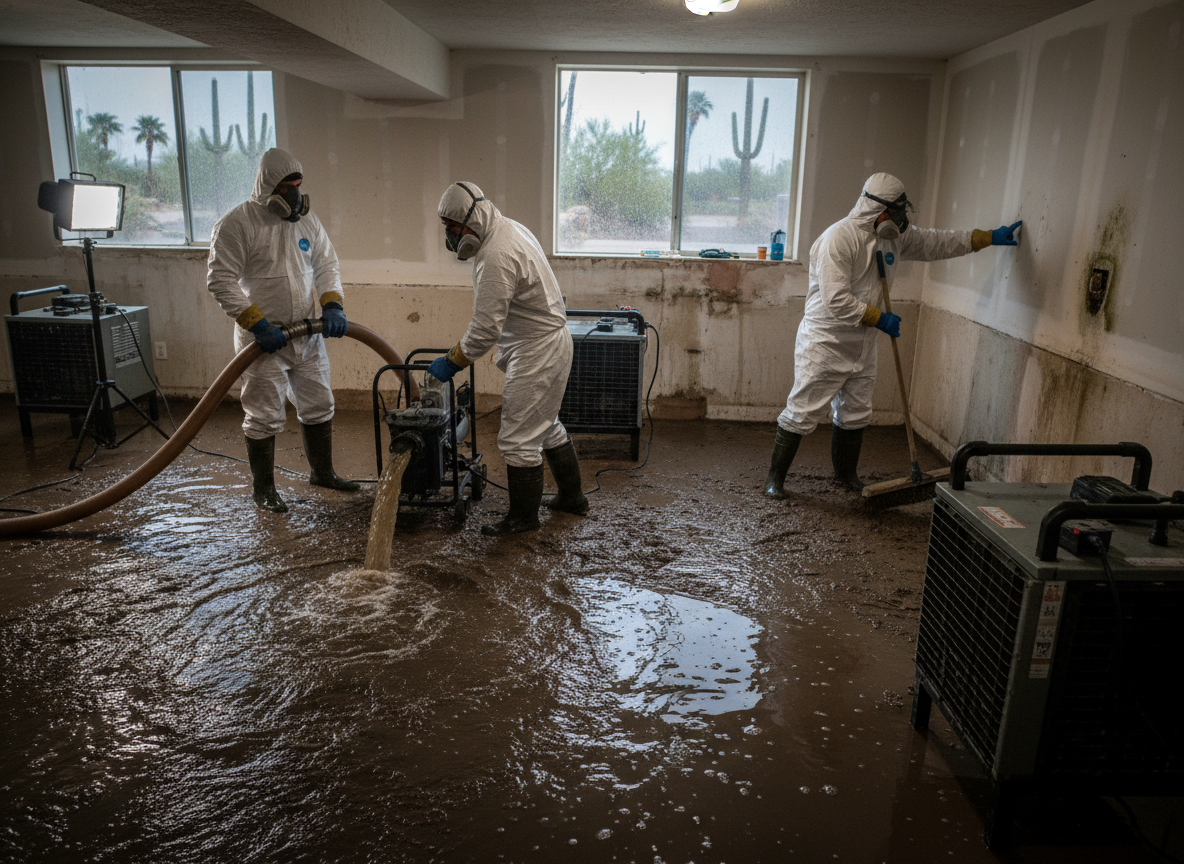
Heavy rains in Mesa can push sewage backups into homes within hours, requiring prompt containment and removal to limit exposure in Maricopa County properties. Start by evacuating affected areas, shutting off electricity at the main panel if water reaches outlets, and avoiding direct contact with contaminated material. Residents in Downtown Mesa and Red Mountain often see backups enter through floor drains or toilets when storm volume exceeds aging sewer lines built before modern grading standards.
Immediate Safety Measures
Sewage water carries bacteria and viruses that thrive in Mesa's extreme summer heat, raising infection risks within 24 hours of a backup. Wear waterproof boots, gloves, and an N95 mask before entering any flooded space. Turn off gas and power only if safe, then ventilate by opening windows in unaffected rooms. In Superstition Springs and East Mesa, flat terrain allows water to pool quickly against foundations, so mark safe walkways with tape and keep children and pets away until professionals arrive. Document visible damage with photos from a safe distance before any movement of items.
Contact emergency services if sewage reaches electrical systems or if anyone shows symptoms like nausea after exposure. Local conditions near Riverview Park amplify odors in enclosed garages, so avoid using fans that could spread particles until extraction begins.
Assessing Impact on Mesa Housing Stock
Mesa homes built before 1980 in areas like Red Mountain and Downtown Mesa frequently have clay or cast-iron pipes that crack under sudden storm pressure from the Superstition Mountains watershed. Check for standing water in basements, discoloration on drywall up to 12 inches above floor level, and sewage odors in HVAC returns. Properties near Tempe and Phoenix share similar soil conditions where expansive clay shifts during rare heavy rains, allowing backups to travel under slabs. Note any recent irrigation or roof issues that compound drainage problems in neighborhoods such as Superstition Springs.
Walk through each room methodically, testing floors for softness and inspecting under appliances. Older single-story homes common in Alta Mesa and Dobson Ranch often route sewer lines through concrete, making hidden leaks harder to spot without moisture meters.
Professional Extraction and Drying
Trained crews begin with sewage backup cleanup using truck-mounted pumps rated for 500 gallons per minute to remove standing liquid before it seeps deeper into subfloors. They then apply EPA-registered disinfectants to all porous surfaces and extract moisture with industrial dehumidifiers running 48–72 hours. In hot desert conditions, rapid drying prevents mold growth that can start in 48 hours on drywall or carpet padding. Link this process to flood damage cleanup when rainwater has mixed with sewage across multiple rooms.
Technicians also inspect and clean affected ductwork to stop odors from recirculating. Homes near the Mesa Arts Center or Riverview Park benefit from targeted drying because high humidity from the desert monsoon season extends evaporation times.
Long-Term Prevention Steps
Improve grading around the foundation so water flows away from the house at a minimum 6-inch drop over 10 feet, a common fix discussed in Preventing Repeat Flooding In Mesa Homes With Poor Grading. Install backflow valves on main sewer lines and schedule annual camera inspections of pipes in older Red Mountain properties. Clear debris from street drains before monsoon season and consider French drains in low-lying yards near Superstition Springs. These measures reduce recurrence when heavy rains hit Maricopa County again.