
2026-08-31 · John Smith
Preventing Repeat Flooding In Mesa Homes With Poor Grading
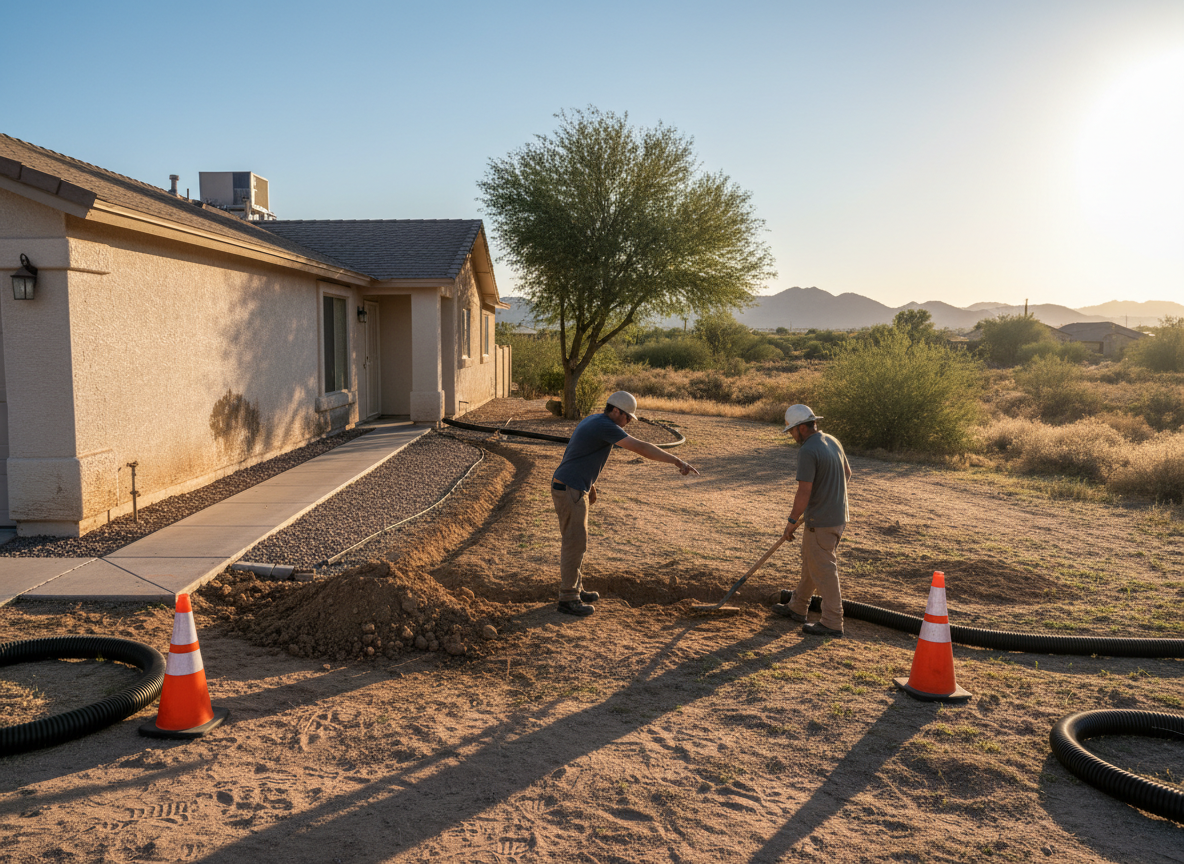
Regrading soil to direct water away from the foundation stops repeat flooding in Mesa homes with poor grading. In Maricopa County, homes in Downtown Mesa and Red Mountain often sit on lots where original grading has settled or eroded over time, allowing water from summer storms to pool against walls and enter crawl spaces or slabs.
How Mesa's Desert Climate and Terrain Create Grading Issues
Mesa's hot desert climate brings sudden monsoon rains that drop heavy volumes in short periods. These downpours hit properties near the Superstition Mountains and in Superstition Springs where natural slopes already direct water toward developed lots. Extreme summer heat bakes soil hard, then cracks form that let water infiltrate faster once rain arrives. Older housing stock in Downtown Mesa features flatter yards and minimal original drainage, while homes near Riverview Park sit on soil that compacts differently after repeated wet-dry cycles. Poor grading turns these normal weather patterns into repeat flooding events because water has no path away from the structure. Residents in nearby Tempe and Phoenix face similar issues, but Mesa's specific elevation changes around Red Mountain amplify the problem when driveways and patios were installed without proper pitch.
Spotting Grading Problems Before They Cause Repeat Flooding
Walk the perimeter after a storm and look for water that remains within 6 feet of the foundation for more than a few hours. Check window wells, exterior doors, and garage thresholds in neighborhoods like Superstition Springs for silt lines that show how high water climbed. In Red Mountain Ranch and East Mesa, many lots slope inward because original builders did not account for the natural fall toward the Salt River corridor. Examine downspout extensions and see whether they empty onto flat ground that allows water to travel back toward the house. These visual checks reveal grading failures before they lead to another round of water intrusion and the need for flood damage cleanup.
Practical Regrading Steps for Mesa Properties
Start by removing at least 6 inches of soil within 10 feet of the foundation and adding fill so the ground slopes outward. Use compactable soil mixed with a small amount of gravel near the base to improve drainage without creating new low spots. In areas like Downtown Mesa where space is tight, install French drains or shallow swales that tie into existing street gutters. Extend downspouts at least 5 feet from the house and add splash blocks or buried pipe to carry water farther. Homeowners near the Superstition Mountains should also clear debris from natural drainage paths that cross their lots. These changes reduce the volume of water that reaches the foundation during monsoon events and lower the chance of repeat flooding.
When Professional Help Prevents Costly Repeat Damage
If water has already entered living spaces or the lot has complex slopes, contact a local team for assessment. Emergency Water Damage Restoration crews familiar with Mesa soil can evaluate hidden grading issues around slabs and recommend targeted fixes. For properties that have already experienced flooding, flood damage cleanup often reveals that poor grading was the root cause. After cleanup, the same crew can advise on regrading before the next storm season. Homeowners dealing with repeated issues near the Salt River may also want to review Removing Mud And Debris After Flooding Near The Salt River for additional steps that complement grading corrections. Addressing the slope now keeps water out and avoids repeated interior damage in Mesa's variable monsoon patterns.