2026-08-31 · John Smith
Drying Out Homes After Pool Overflow During Monsoon Season
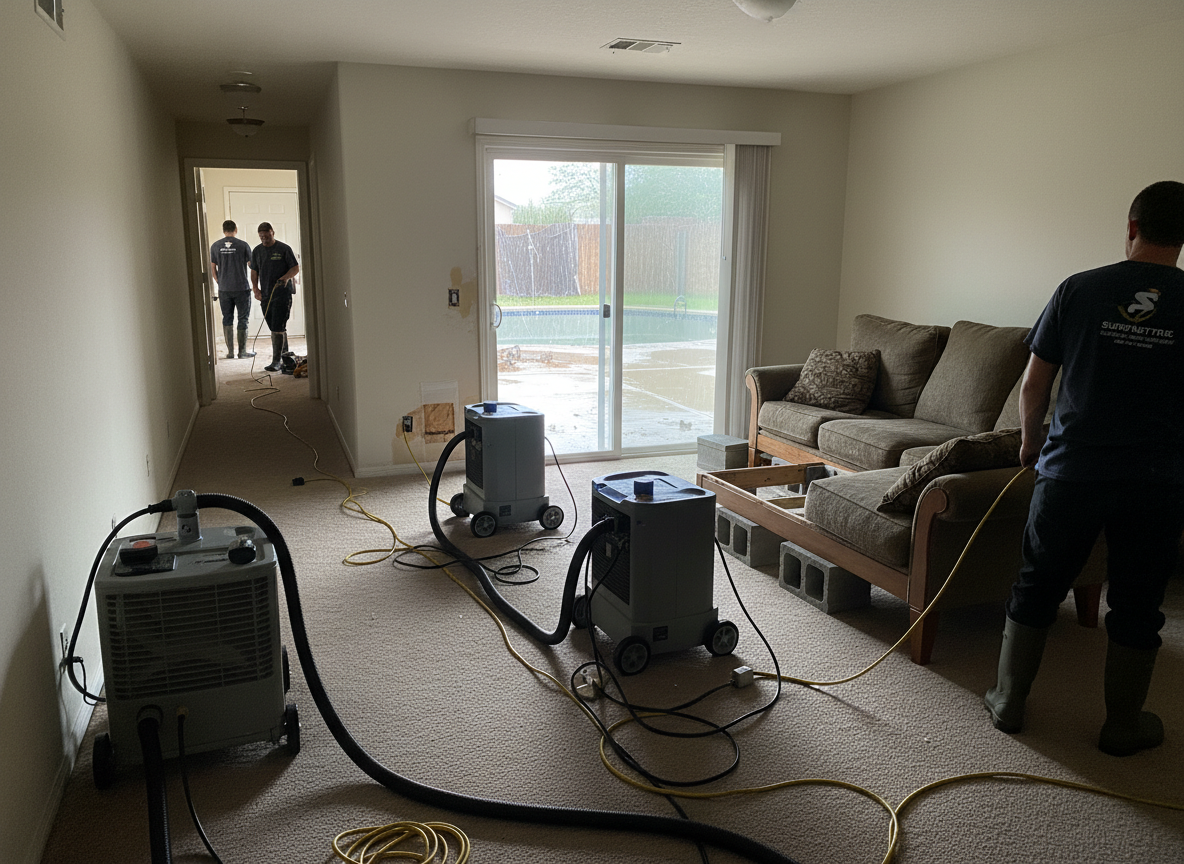
Pool overflow during monsoon season in Mesa typically requires 5–10 days of active drying with commercial air movers and dehumidifiers once standing water is removed. The hot desert climate accelerates surface evaporation yet traps moisture under slabs and in wall cavities common to 1970s–1990s homes in Red Mountain and Superstition Springs.
Monsoon Patterns and Pool Overflow Risks
Mesa receives most of its annual rainfall in July and August when monsoon storms drop 1–3 inches in under an hour. Homes near the Superstition Mountains often see rapid sheet flow that pushes pool water into yards and through sliding doors. In Superstition Springs and Red Mountain neighborhoods, older concrete block construction with attached garages channels water toward slab edges, saturating carpet pads and subfloors within minutes. The extreme summer heat that follows raises indoor humidity above 70 percent, slowing natural evaporation and increasing the chance of hidden mold growth behind baseboards.
First Steps After Overflow Reaches Living Areas
Remove as much standing water as possible with a wet vac before it migrates into drywall. Homeowners in Downtown Mesa should check crawl spaces and HVAC returns immediately because pool chemicals lower pH and can corrode metal ductwork. Document water lines on floors with photos, then shut off power to affected zones. Contact a restoration team for Flood Damage Cleanup that includes extraction and antimicrobial treatment before moisture penetrates deeper into framing.
Professional Drying and Dehumidification Process
Technicians place air movers at 45-degree angles along walls and use refrigerant dehumidifiers sized at 70–100 pints per day for a typical 2,000-square-foot Mesa home. In the extreme heat of August, units run 24 hours while technicians monitor moisture meters every 48 hours. Readings must drop below 15 percent on drywall and 12 percent on hardwood before equipment is removed. Structural Drying & Dehumidification protocols also include placing sensors under cabinets and behind toilets where pool water often pools unnoticed.
Mold Prevention in Desert Heat
Mesa’s low nighttime humidity helps once dehumidifiers maintain 45–50 percent indoor levels, yet pool chemicals can leave residue that feeds mold on drywall paper. Homes in East Mesa with stucco exteriors trap vapor behind weep holes, so crews often remove baseboards and drill ¼-inch holes every 16 inches for airflow. Follow-up inspections at 14 and 30 days catch any rebound growth before it spreads into HVAC systems.
Related Risks and Next Steps
Heavy monsoon runoff can also stress irrigation lines, leading to secondary leaks that compound pool overflow damage. Residents can review How Irrigation Leaks Lead To Flood Damage Cleanup Needs In Mesa for additional prevention tips. Call Mesa Restoration Solutions at 2702 E University Dr #101 during Mon–Fri 8am–6pm or Sat 9am–2pm for on-site moisture mapping and drying plans tailored to local soil and housing stock.